
To view the full content of each post, please click on the title, featured photo or on “read more” after the post intro.
For a list of all posts without images and preview text, click here. Thank you!
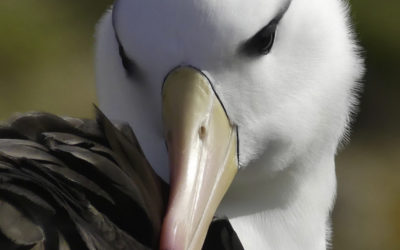
ePostcard #32: Albatrosses—Ocean Spirits
ePostcard #32: Albatrosses—Ocean Spirits I feel I have joined a higher order of mortal,having seen the albatross. Robert Cushman Murphy, author, Guide to Oceanic Birds, 1940 We spent six magical weeks aboard the Spirit of Enderby exploring the seemingly...
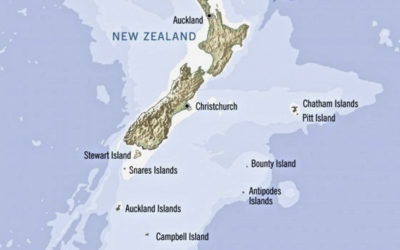
ePostcard #31: Introducing the Galápagos of the Subantarctic
ePostcard #31: Introducing the Galápagos of the Subantarctic To explore the magnificent ocean realm of New Zealand’s Subantarctic Islands, we must leave typical cruise routes far behind us. In December of 2006, snug aboard our 48-passenger, ice-strengthened and...
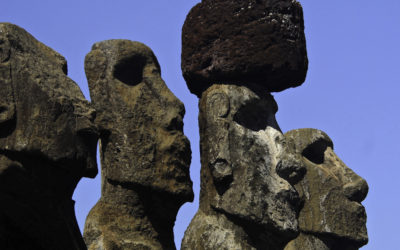
ePostcard #30: Twilight at Rapa Nui (Easter Island, Chile)
ePostcard #30: Twilight at Rapa Nui (Easter Island, Chile) Ancient Polynesians lacked compasses, writing and metal tools, but they were masters of sailing canoe technology and their navigational skills were unsurpassed. By about A.D. 1200, the prehistoric Polynesian’s...
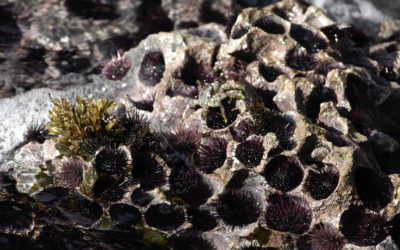
ePostcard #29: Rock-boring Sea Urchins (Easter Island, Chile)
ePostcard #29: Rock-boring Sea Urchins (Easter Island, Chile) I benefitted from lessons learned growing up in a family of sharp-eyed observers of the natural world. One of the secrets to being a good naturalist, is to be a good observer—continually honing your ability...
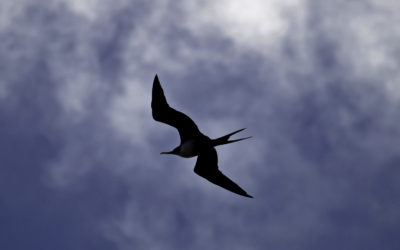
ePostcard #28 Rapa Nui Rock Art (Easter Island)
ePostcard #28 Rapa Nui Rock Art (Easter Island) Throughout Oceania, seabirds were seen as omens, messengers, mythical explorers, spirits of the gods, the dead, as well as a source of food. My silhouetted photo of a soaring great frigatebird, taken shortly after...
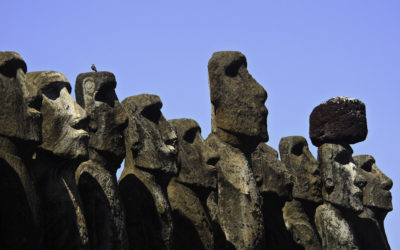
ePostcard #27: Rapa Nui (Easter Island, Chile)
ePostcard #27: Rapa Nui (Easter Island, Chile) Looking down at tiny Easter Island, after a 5-hour jet flight from Chile across a sapphire-blue ocean, thoughts of Thor Heyerdahl’s pioneering expedition in 1947 aboard Kon-Tiki filled my mind. His extraordinary...
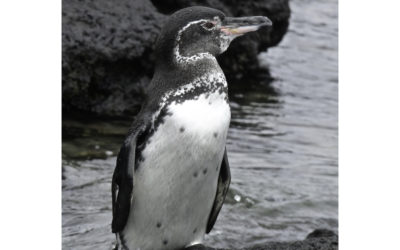
ePostcard #26: The Galápagos Penguin
ePostcard #26: The Galápagos Penguin My dear friend and colleague, Dr. Dee Boersma, has been at the forefront of Galápagos penguin research for more than 45 years. Her landmark book, Penguins: Natural History and Conservation, with co-editor Pablo Garcia Borboroglu,...
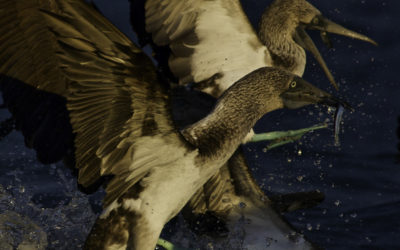
ePostcard #25: Blue-footed Boobies (Galápagos)
ePostcard #25: Blue-footed Boobies (Galápagos) Blue-footed boobies live along the western coasts of Central and South America, from Mexico to Peru. The Galápagos Islands population includes about half of all breeding pairs of blue-footed boobies. These beautiful...
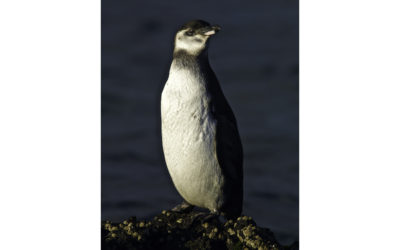
ePostcard #24: Flightlessness Works (Galápagos)
on ePostcard #24: Flightlessness Works (Galápagos) In his seminal work, On the Origin of Species, Darwin suggested that there were evolutionary consequences for animals resulting from what he referred to as “the use and disuse” of various anatomical parts. Unlike...
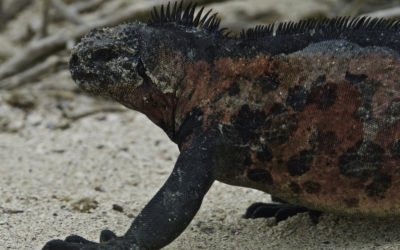
ePostcard #23: Bodacious Reds (Galapagos Islands)
ePostcard #23: Bodacious Reds (Galapagos Islands) The color red—bold and eye-catching in plants and animals—provokes our curiosity as naturalists in ways that few other colors do. Exploring the evolution and science behind how animals perceive color in their world is...
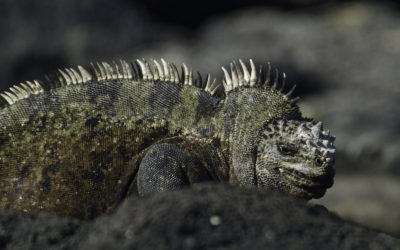
ePostcard #22: Darwin’s Islands (Galapagos)
ePostcard #22: Darwin’s Islands (Galapagos) We begin our Island Biodiversity ePostcard series with a sailing schooner voyage to the Galapagos Islands aboard the S/S Sagitta—a dream come true for any naturalist. The Galapagos Archipelago, a scattering of small...
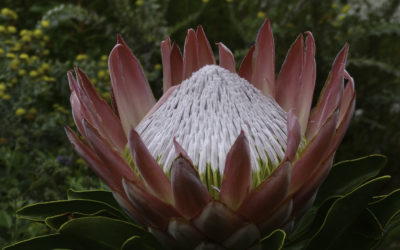
ePostcard #21: Protea Splendor
ePostcard #21: Protea Splendor On the southwestern tip of the African continent, South Africa’s famous Cape Floral Kingdom (or fynbos) is a center of diversity for one of the most spectacular flowering plant families in the world—the Proteaceae. The two main centers...
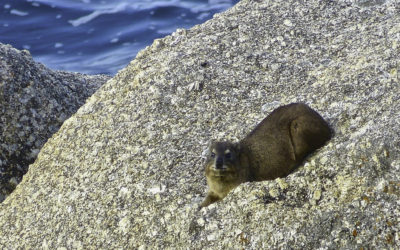
ePostcard #20: Rock Hyrax (South Africa)
ePostcard #20: Rock Hyrax (South Africa) If you haven’t heard of hyraxes, which are called “ dassies” in South Africa, you are not alone. Hyraxes inhabit rocky terrain across sub-Saharan Africa and the Middle East. At first glance, the rock hyrax appears rodent-like...
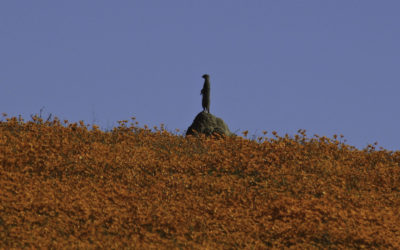
ePostcard #19: Meerkats (South Africa)
ePostcard #19: Meerkats (South Africa) My fascination with meerkats goes back nearly fifty years. Spotting my first meerkat standing “sentinel” atop a termite mound in a sea of African daisies brought me to a standstill, binoculars raised. These fascinating...
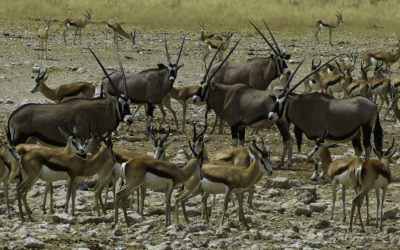
ePostcard #18: A Moment in Time (Etosha National Park, Namibia)
ePostcard #18: A Moment in Time (Etosha National Park, Namibia) Settling in at the edge of Etosha’s salt-pan for a day observing the comings and goings of a diverse array of handsome bovids is a supreme luxury! The range of variability in size, fur color and...
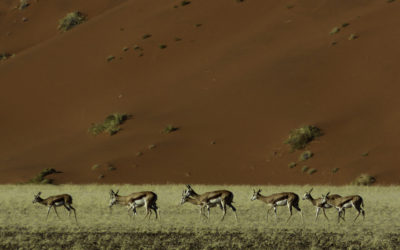
ePostcard #17: Bovidae Diversity (Namibia)
ePostcard #17: Bovidae Diversity (Namibia) African biodiversity has been a recurring theme throughout this series of ePostcards. With this postcard, I offer a fresh photographic canvas for exploring biodiversity within a single family—the Bovidae (antelopes and...
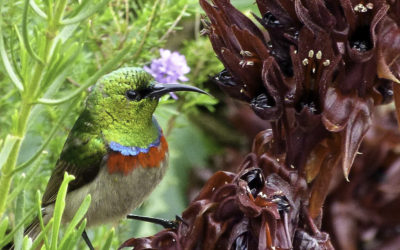
ePostcard #16: Nectar Lovers
ePostcard #16: Nectar Lovers When South Africa's fynbos and succulent shrublands are in full bloom, watching sunbirds is a visual meditation, their gem-like colors--emerald, sapphire, ruby, and topaz--sparkling in the sunshine. Sunbirds are members of the family...